Population history and medical genetics
Populations carry history in their DNA whether or not anyone wrote it down. Sometimes that history is medically consequential, because a mutation that entered a community once and stayed tells you exactly who should be screened for it. Sometimes it settles an argument that documents alone could not.
A rare disease with a single origin
Recessive dystrophic epidermolysis bullosa is a severe genetic skin disorder caused by mutations in
COL7A1, the gene for type VII collagen. More than 800 different
pathogenic mutations are known. One of them, c.6527insC, accounts for a
strikingly large share of cases across Hispanic populations in Spain, Argentina, Chile, Mexico, and the
southwestern United States.
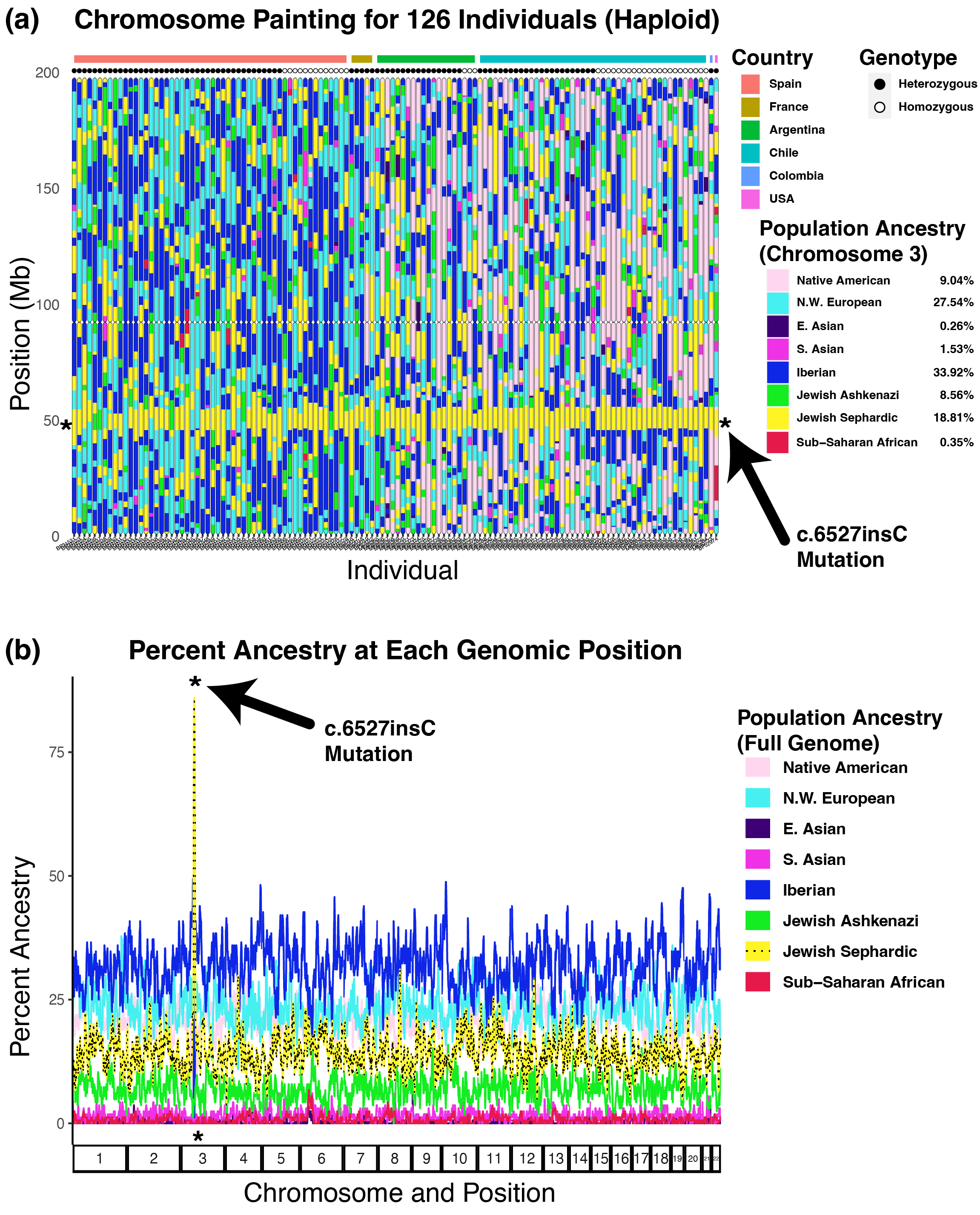
Two explanations were available. Either the mutation arose several times independently, which happens, or it entered these populations once and spread. Distinguishing them requires looking at the DNA surrounding the mutation rather than the mutation itself. If every carrier inherited it from one ancestor, they should all carry the same stretch of neighboring DNA, progressively whittled down by recombination over the generations since.
That is what we found. I ran local ancestry inference and identity-by-descent haplotype analysis across 128 individuals, and carriers share a Sephardic Jewish haplotype background spanning the region containing the mutation. One founder, carried out of Iberia into the New World during the Sephardic diaspora, rather than several independent origins.
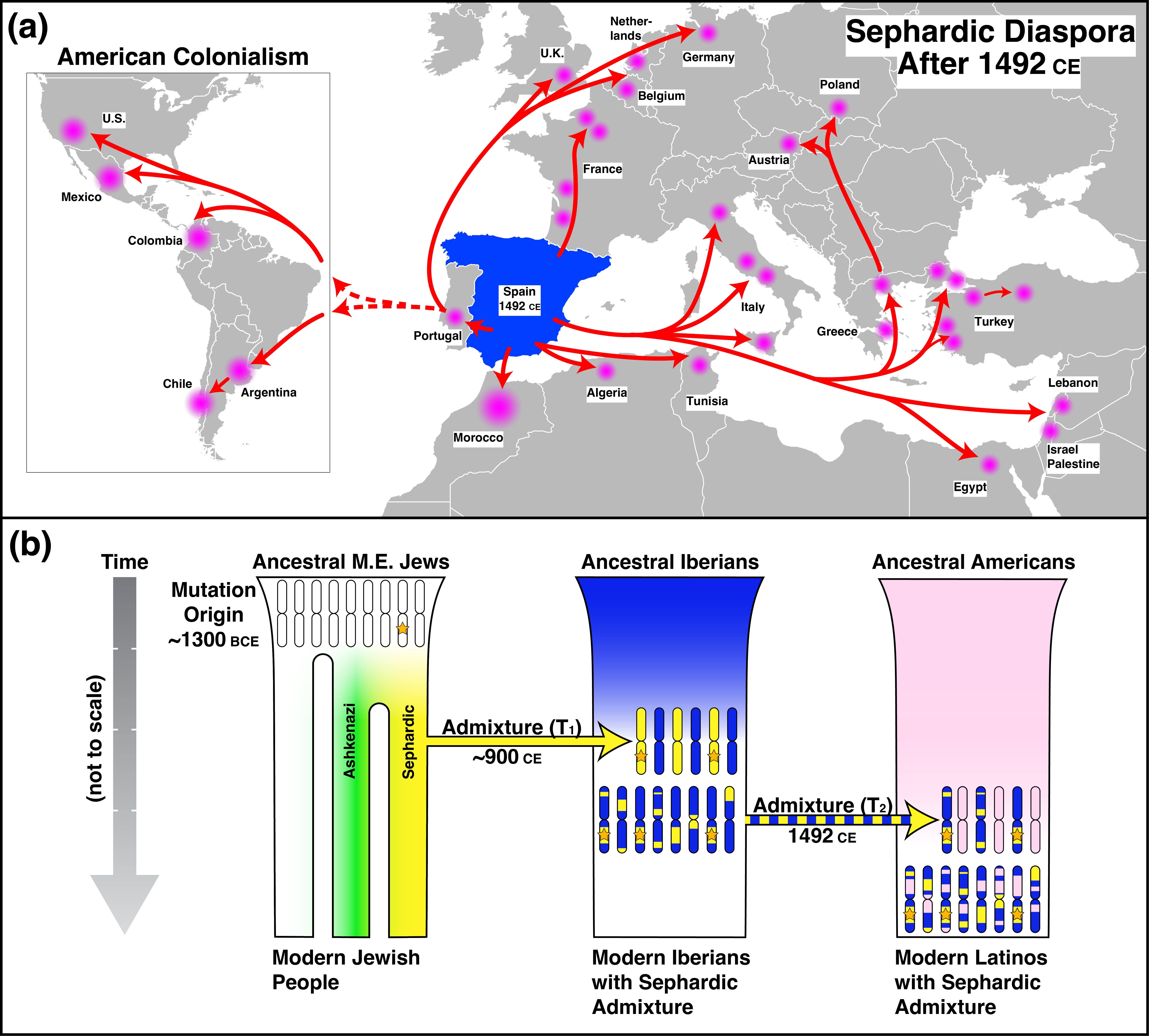
This matters clinically. Carrier screening aimed at the right populations is far more efficient than screening broadly, and knowing the mutation travels with a specific ancestral background tells you which communities to prioritize and which relatives of a proband are most worth testing.
The work ran across seven countries with dermatologists, clinical geneticists, and population geneticists. Much of my job was translating what the genetics could and could not support into something a clinical audience could act on, which is a different skill from producing the result.
Technical details
Local ancestry came from the myOrigins v3.0 pipeline, giving
per-chromosome population assignment across the COL7A1 region for every participant.
Shared descent was confirmed independently through pairwise IBD matching using the Family Finder
algorithm with explicit segment thresholds, across all pairs among 128 samples including controls.
Relationships among participants were summarized by hierarchical clustering on the pairwise matching matrix, which separates genuine founder-haplotype sharing from background relatedness within a community. Running two independent lines of evidence, local ancestry and IBD, matters here because either alone would be contestable.
How many priestly lineages are there?
Early studies in the 1990s using a handful of Y-chromosome markers found that many self-identified Jewish priests, Cohanim, shared related haplotypes. The result became widely known, but the marker resolution was far too low to answer the obvious follow-up questions: how many distinct lineages exist, when did they arise, and how do they map onto the history of Jewish communities?
We generated 104 new whole-Y sequences from rigorously documented Cohanim spanning 20 diaspora origins, and incorporated 215 legacy samples retyped for diagnostic markers. A branch qualified as a Cohen lineage under a stated rule: at least five men, and at least half of them self-identifying as Cohanim.
Nine branches met the criterion. The largest, CB-01, accounts for roughly 45% of all Cohanim sampled, coalesces around 850 BCE, and is the only one of the nine present in every major Jewish community. Its internal structure shows rapid branching between about 700 and 300 BCE, a long flat period through the Roman and Byzantine eras, and renewed expansion after 800 CE.
That trajectory tracks known demographic history closely enough to be interesting and loosely enough to be worth stating carefully. A phylogeny records population size changes; it does not record why they happened.
Technical details
Sequences were Big Y-700 whole-Y, with phylogenies and branch TMRCAs built on the FamilyTreeDNA and YFull backbones using pedigree-calibrated mutation clocks rather than fossil or archaeological calibration. The study also proposes a stable SNP-block nomenclature (CB-01 through CB-09, numbered by antiquity of coalescence) so that later work can refer to the same branches unambiguously even as the underlying tree grows.
Where Moroccan Jews came from
A long-standing hypothesis holds that the Jewish community of Morocco formed largely through conversion of indigenous Berber populations. It has been debated for decades and had never been tested at full Y-chromosome resolution, which means the debate had been running on evidence that could not settle it.
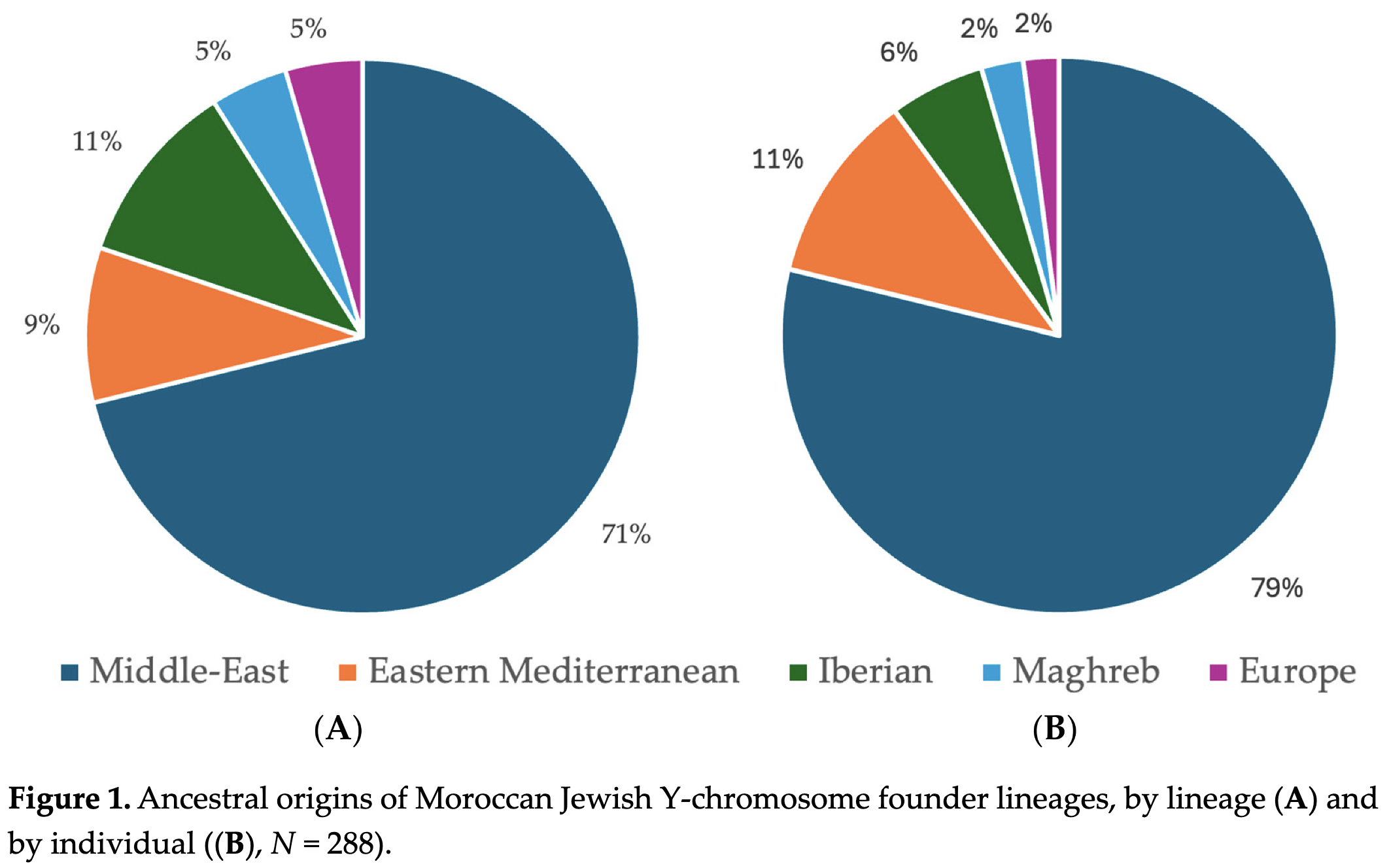
Across 288 men of genealogically verified Moroccan Jewish descent we identified 111 distinct founder lineages. About 71% of those lineages, and 80% of individuals, trace to haplogroups common in the Middle East. Only 4.5% of founder lineages are of indigenous North African origin. Another 11% are Iberian, reflecting centuries of movement across the Strait.
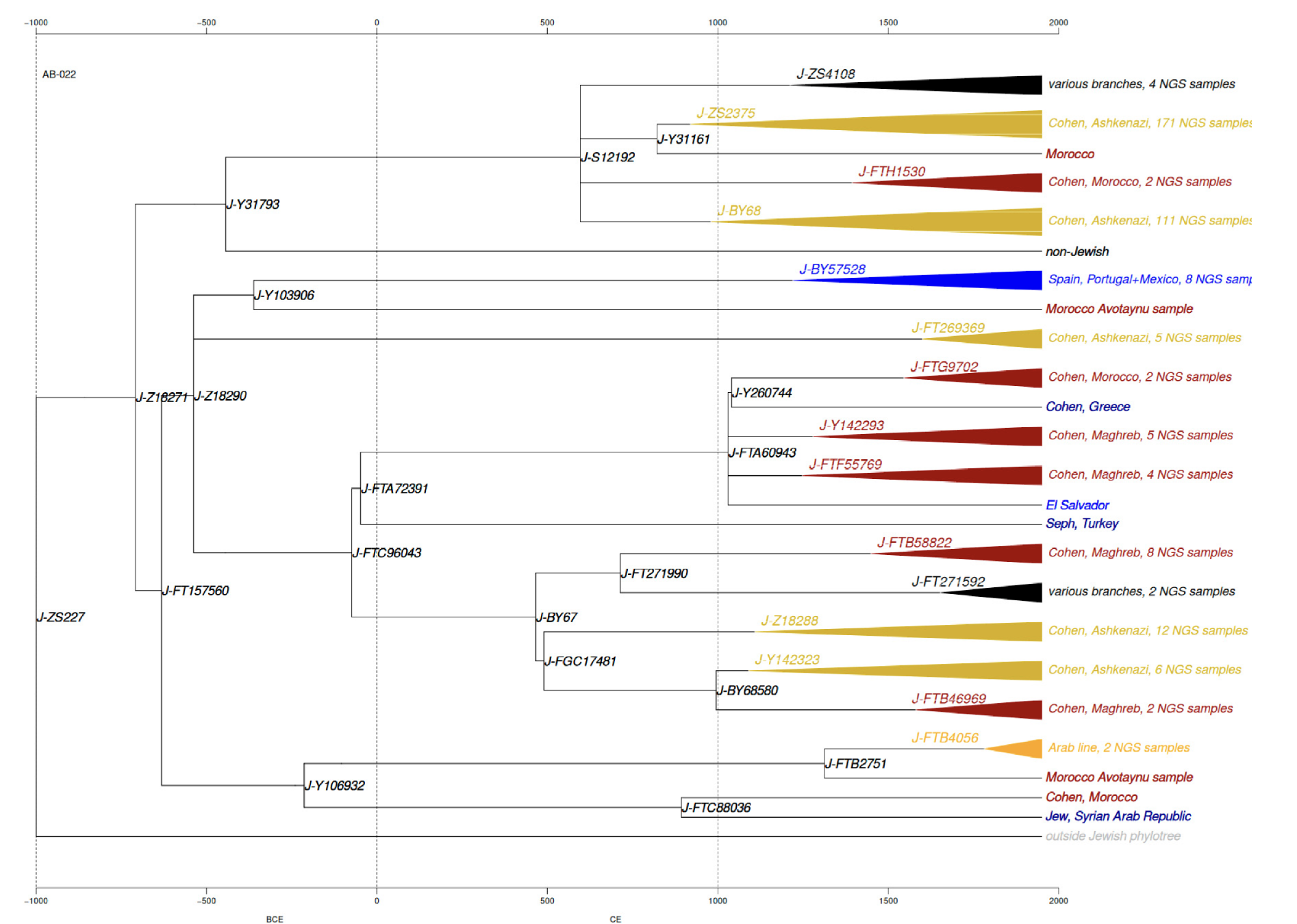
Split dates between Moroccan and Ashkenazi or Sephardic subclades cluster between the fifth and eighth centuries CE, which places the ancestral lineages around the Mediterranean basin already in late antiquity. The Berber conversion hypothesis does not survive the data at this resolution.
Technical details
Samples came through the Avotaynu DNA Project with genealogical verification of Moroccan Jewish descent, which is what makes founder-lineage counting meaningful rather than a count of whoever happened to test. Founder lineages were defined phylogenetically and dated by TMRCA, and split dates between Moroccan and comparison subclades were used to discriminate between a European route and a Middle Eastern route for the ancestral migration.
A peninsula that stayed put
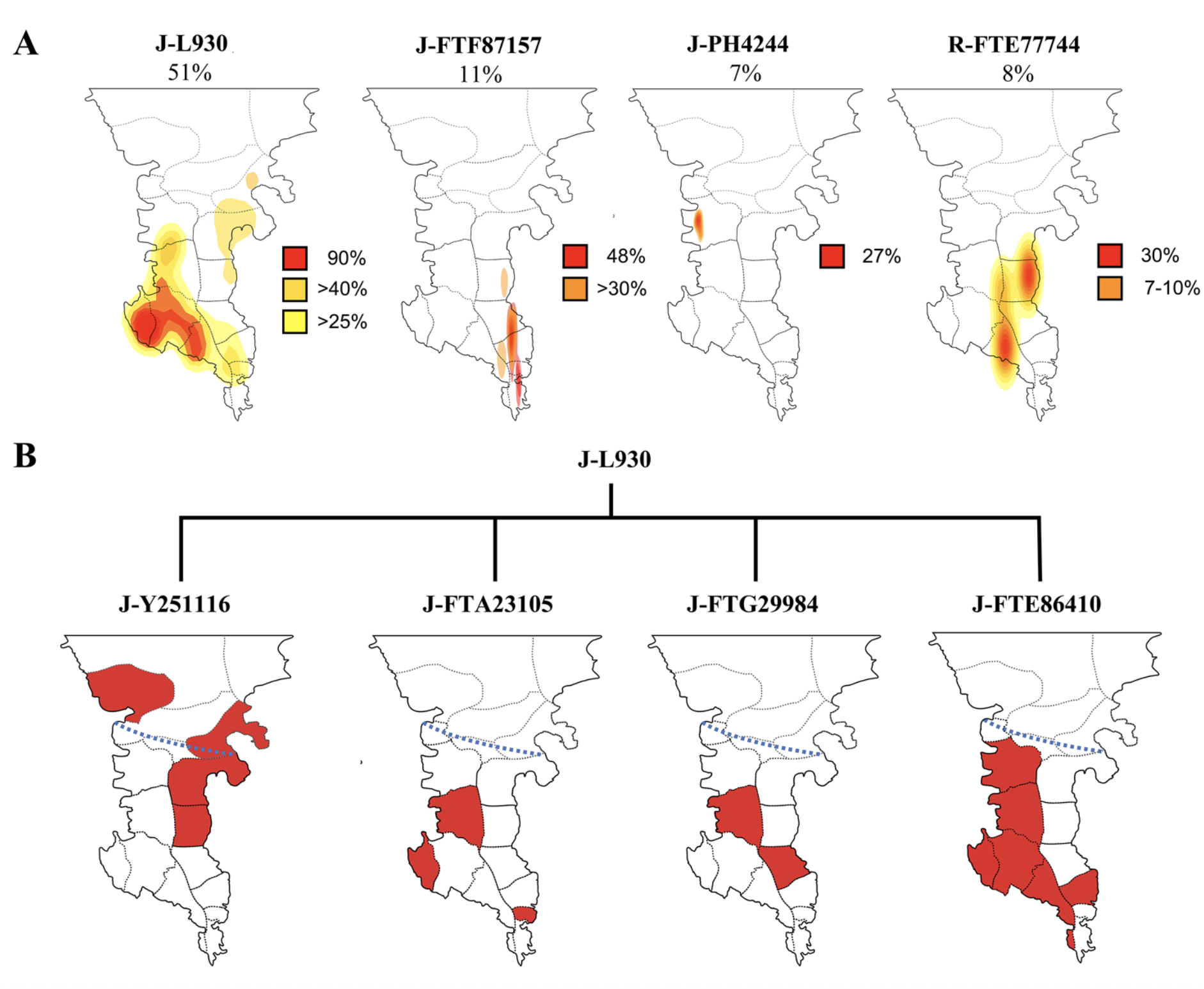
The Deep Maniots occupy the southern tip of the Mani Peninsula in Greece, behind mountains that made the region difficult to reach. They have a distinct dialect, a distinct culture, and a patrilineal clan structure, and they are thought to have been largely bypassed by the sixth-century migrations that reshaped Balkan demography. Whether cultural isolation matched genetic isolation was untested.
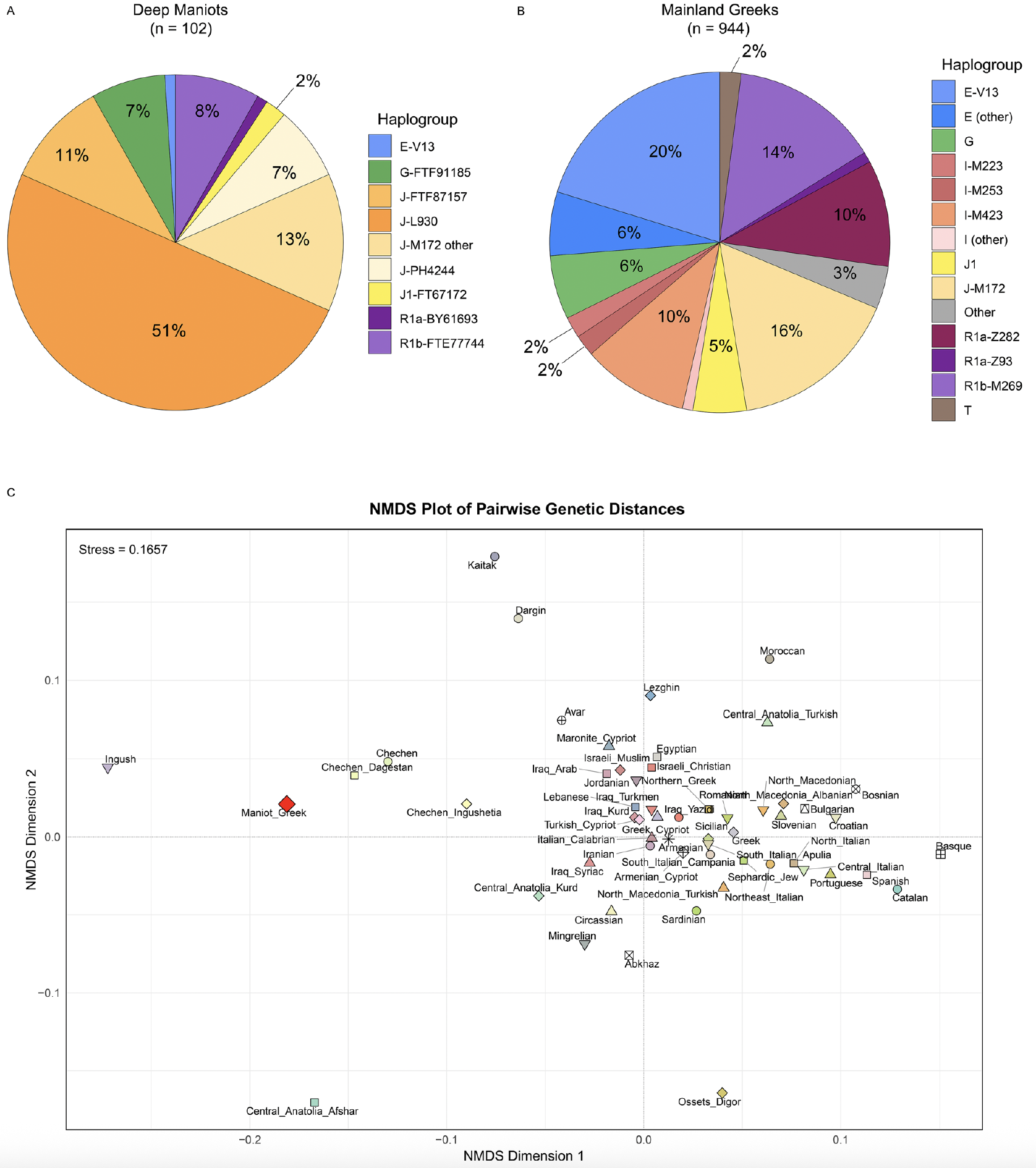
Across 102 Deep Maniots, roughly 80% of paternal lineages fall in West Asian haplogroup J-M172, with the single subclade J-L930 accounting for about half of all lineages. A concentration like that in an open population would be surprising. Here it points to genetic continuity reaching back before the medieval period.
The maternal picture is more varied, which is the usual pattern when women move between communities more often than men do. Reading the two together is the point: a single marker system would have supported either an isolation story or a mixing story depending on which one you chose.
Technical details
Y-DNA and mtDNA were characterized by next-generation sequencing across 102 individuals. Comparative positioning used Non-Metric Multidimensional Scaling on pairwise Rogers distances computed from 17 Y-chromosome STRs, against 61 metapopulations including 405 mainland Greeks. Branch ages came from TMRCA estimation on the whole-Y phylogeny, and maternal structure was summarized with median-joining networks for the principal mitochondrial haplogroups.
Women moving across Eurasia
An ongoing collaboration traces mitochondrial haplogroup W across Eurasia from the Early Neolithic through the Iron Age. Because mitochondrial DNA passes only through mothers, its geographic structure records female movement specifically, and that record frequently differs from what the Y chromosome shows for the same populations over the same period. Those disagreements are the interesting part.
Papers from this work
- Warshauer E., Maier P.A., Runfeldt G., et al. (2025). Sephardic origins revealed for rare skin disorder, recessive dystrophic epidermolysis bullosa, in individuals carrying the unique c.6527insC mutation. Journal of Medical Genetics 63(1), 40–49. DOI · PDF
- Warshauer E., Brown A., Fuentes I., et al., Maier P.A., et al. (2021). Ancestral patterns of recessive dystrophic epidermolysis bullosa mutations in Hispanic populations suggest Sephardic ancestry. American Journal of Medical Genetics Part A 185(11), 3390–3400. DOI · PDF
- Levy-Toledano R., Penninx W., Waas M., Runfeldt G., Sager M., Maier P., Brown A. (2026). Patrilineal genetic ancestry of Moroccan Jews. Genealogy 10(2), 66. DOI · PDF
- Davranoglou L.-R., Kofinakos A.P., Mariolis A.D., Runfeldt G., Maier P.A., Sager M., Soulioti P., Mariolis-Sapsakos T., Heraclides A. (2026). Uniparental analysis of Deep Maniot Greeks reveals genetic continuity from the pre-Medieval era. Communications Biology 9, 157. DOI · PDF
- Lipson J., Bohrer S.G., Cohen-Weinstein S., et al., Maier P., Runfeldt G., Skorecki K. Revisiting the lineages of the Cohanim using data from next-generation sequencing. Rambam Maimonides Medical Journal, in review. DOI
- Yardumian A., Sahakyan H., Carlin M., et al., Maier P., Vilar M. Phylogeographic analyses of mitochondrial DNA haplogroup W offer insights into dispersals of women in Eurasia from the Early Neolithic through the Iron Age. Communications Biology, in review.